




Description
Fibromyalgia Symptom Tracker – Google Sheets
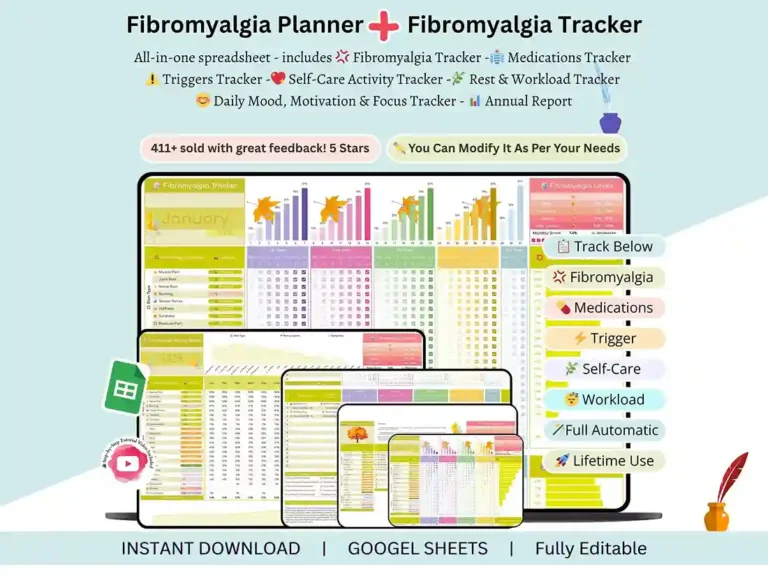
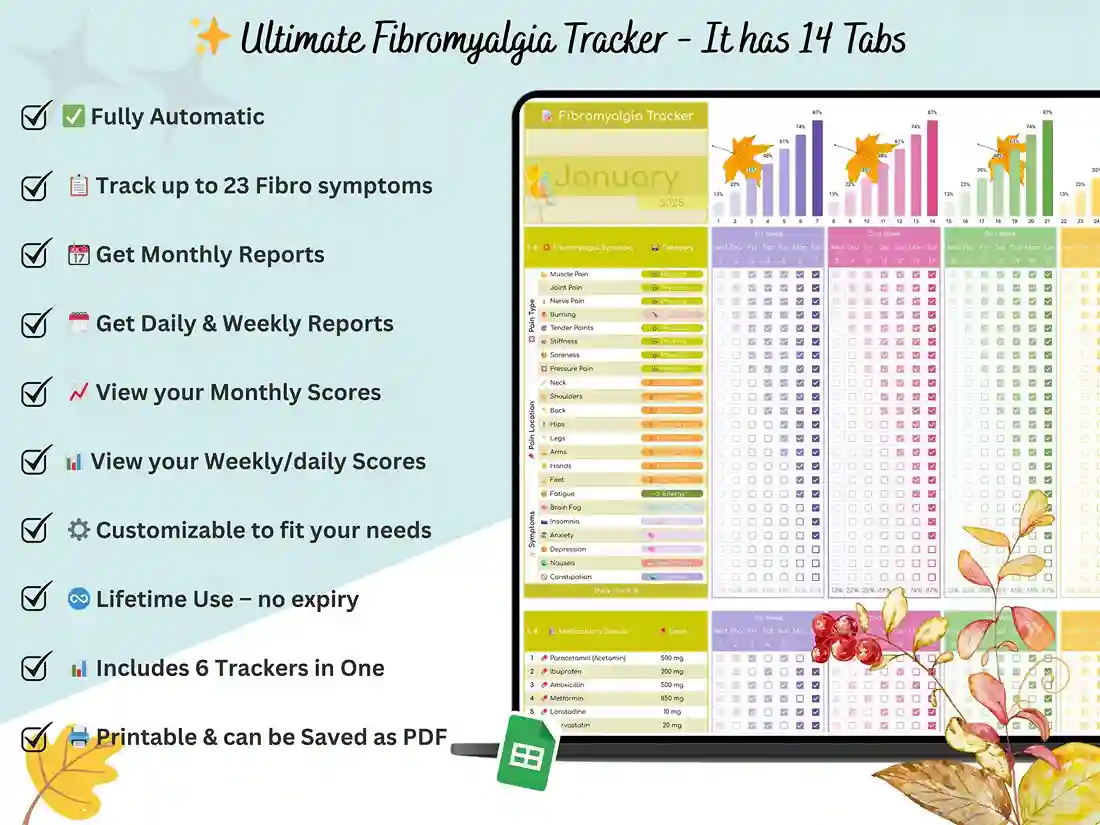
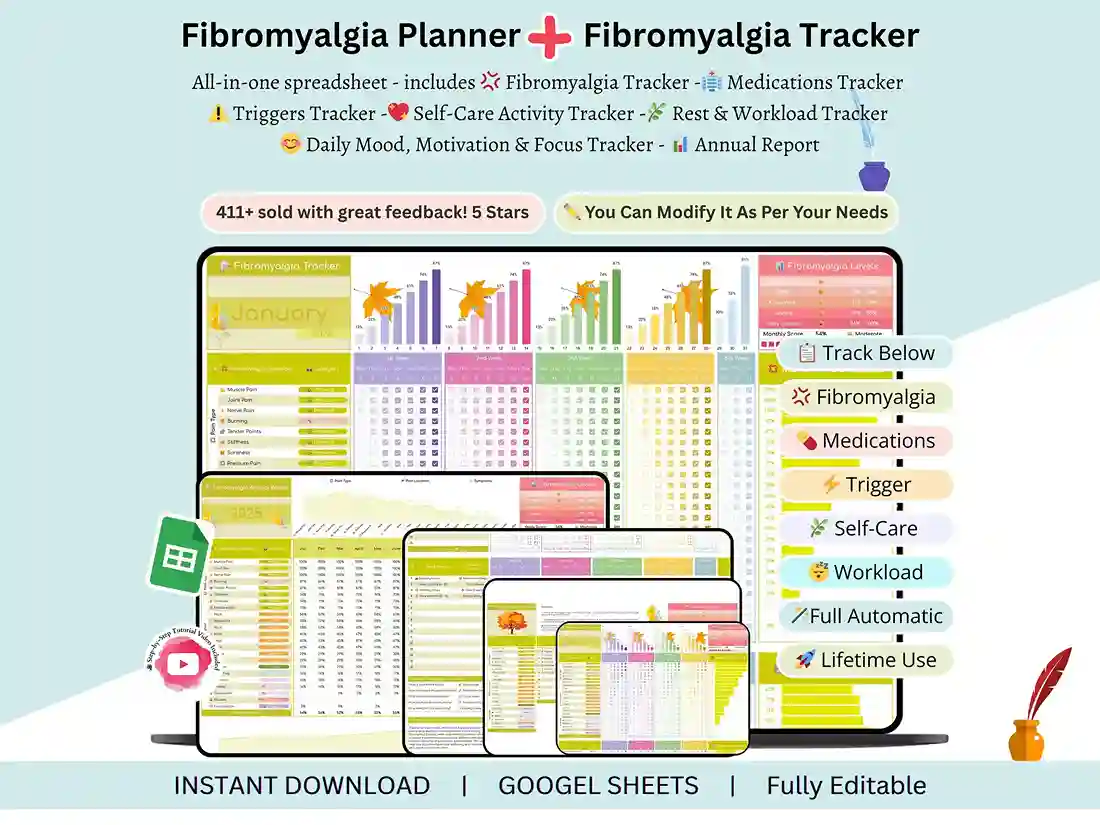
Fibromyalgia doesn’t follow a script. Some days the pain sits in your shoulders, other days it’s your hips, and by the time you’re sitting across from a doctor trying to explain the last month, half of it has already blurred together. That’s really the problem this fibromyalgia symptom tracker was built to solve. It’s an automated Google Sheets system, so instead of trying to remember what a flare felt like three weeks ago, you log it once and let the spreadsheet handle the pattern-spotting for you.
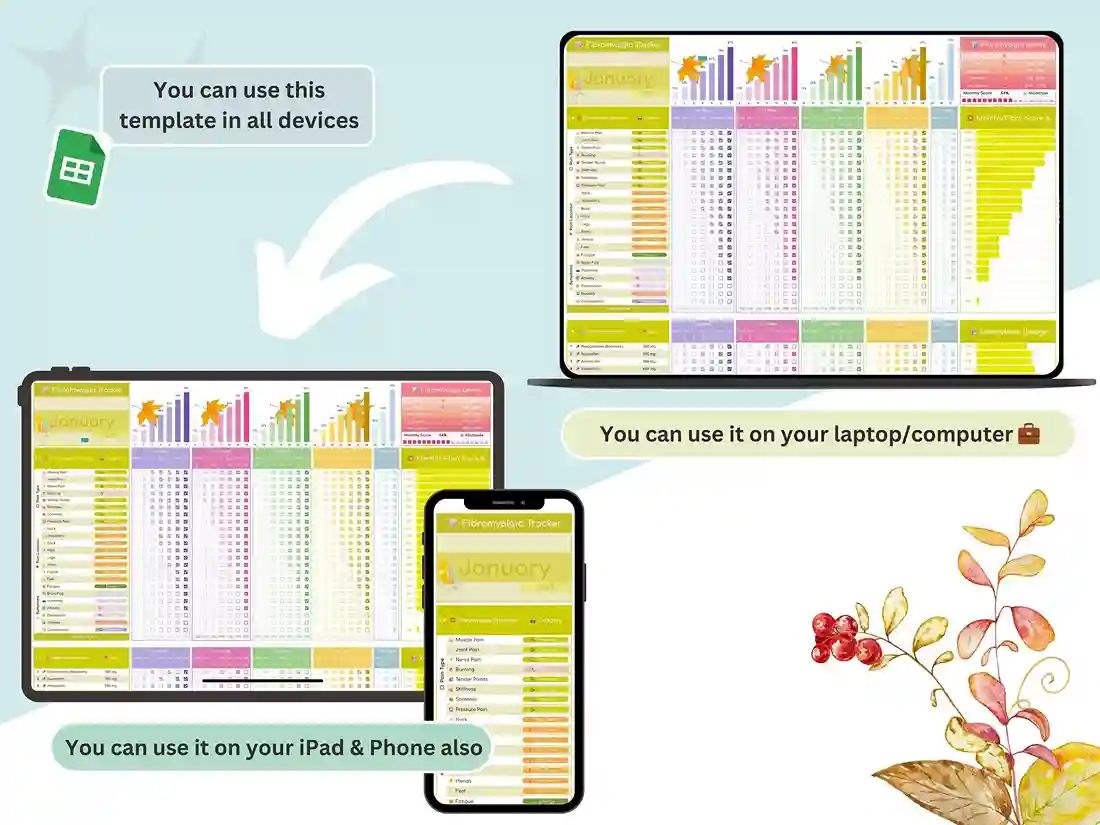
A lot of people start out with a notebook or a chronic pain tracker printable shoved in a drawer somewhere, and it works fine until you actually need to look back at it. This keeps everything in one place instead — a full year of entries you can search, scroll through, and pull up on your phone when your doctor asks “so when did this start getting worse?”
What’s actually inside
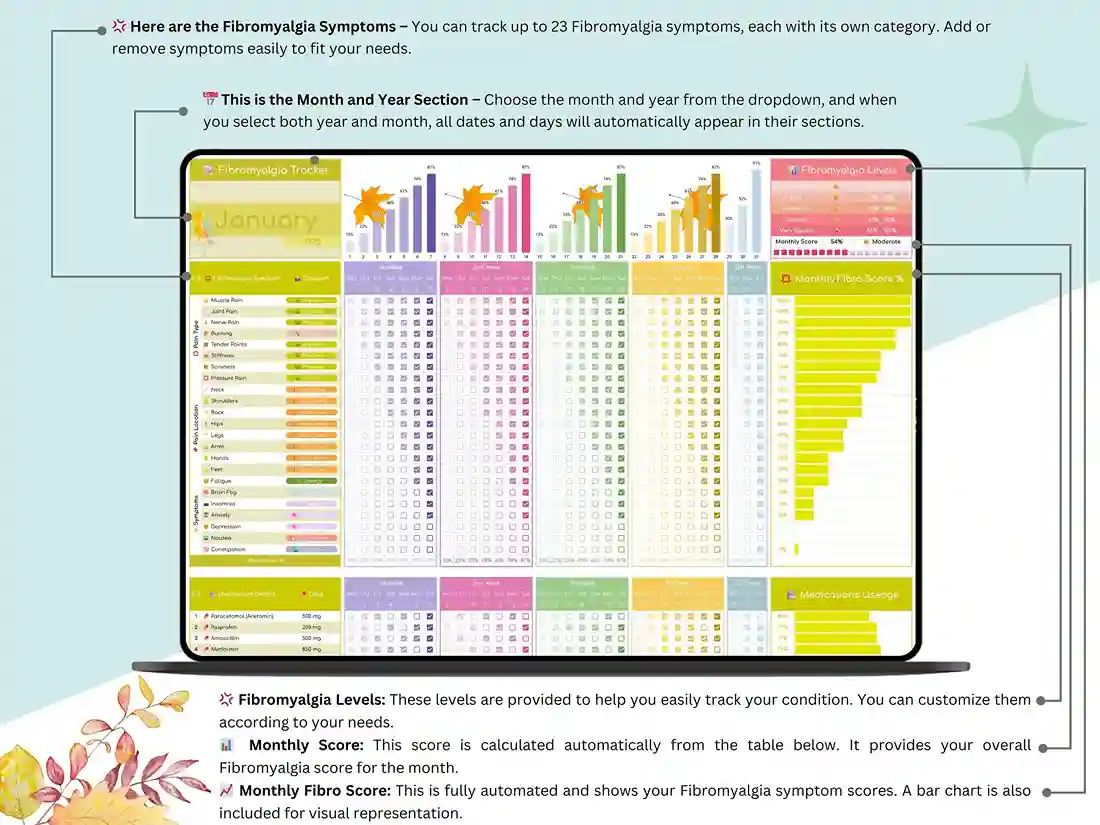
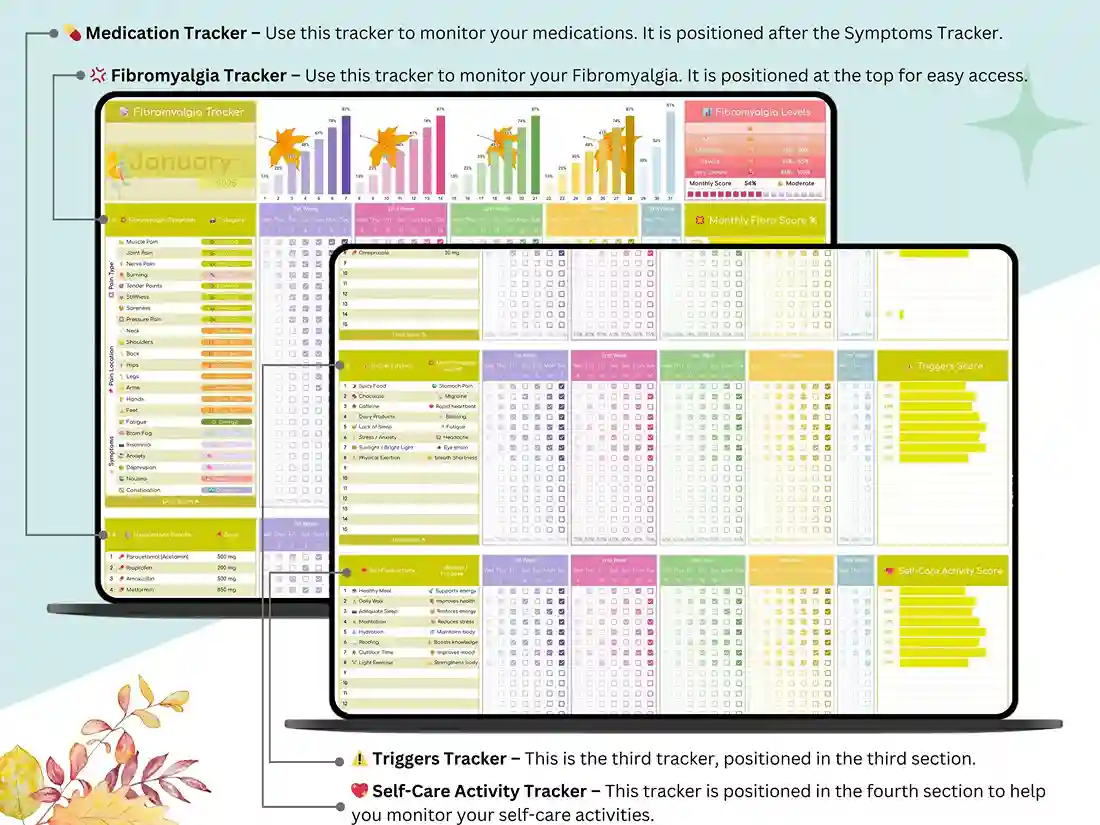
The Pain Type Tracker is where you log what kind of pain you’re dealing with each day — burning, aching, stabbing, whatever fits — so over time you can start noticing whether certain types cluster around certain triggers. Right alongside it is the Pain Location Tracker, which works like a body map pain tracker, letting you mark where the pain shows up and watch how it moves or shifts from one week to the next.
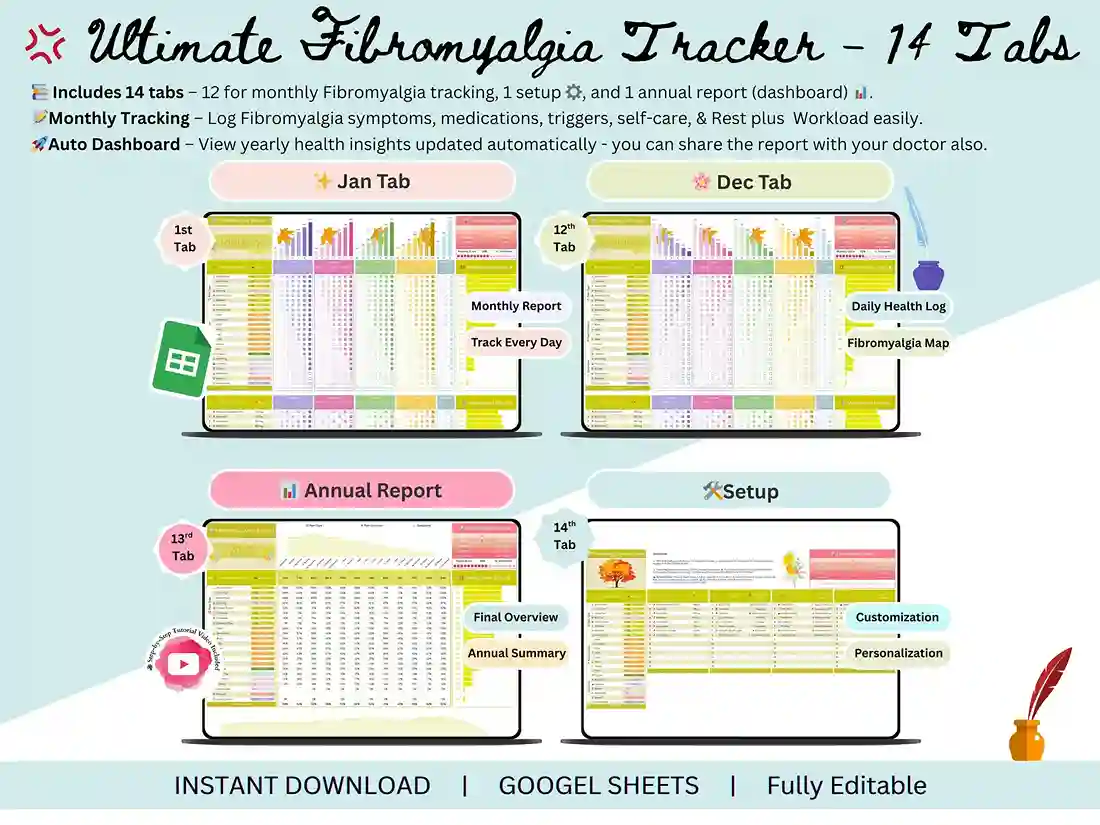
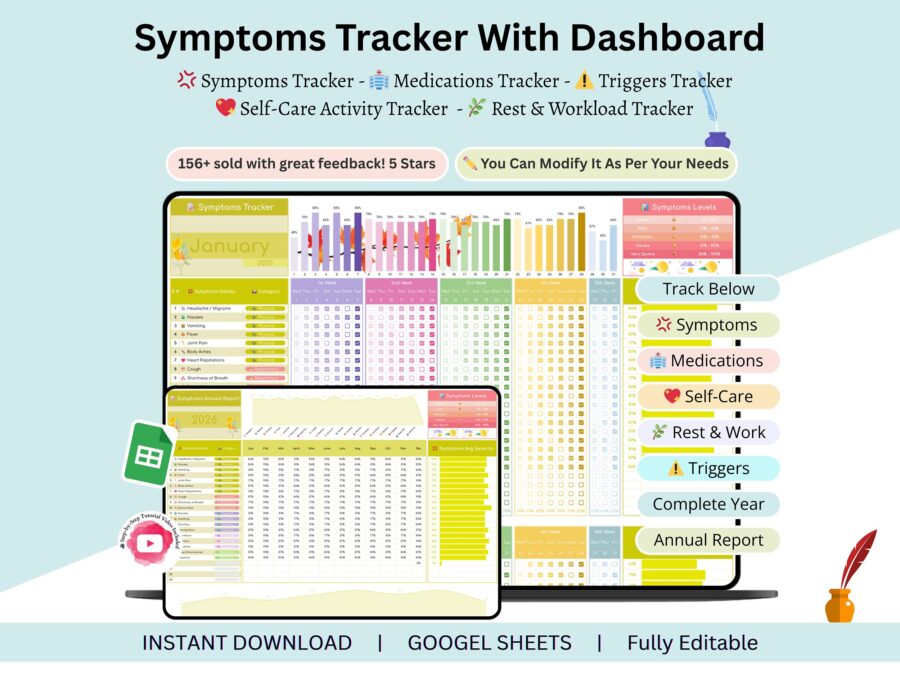
The Symptoms Tracker covers the stuff that tends to travel with fibromyalgia beyond just pain — fatigue, sleep quality, brain fog, mood, all the markers people with this condition end up tracking anyway, just without a system for it. There are 12 monthly tabs, January through December, so your daily fibro tracker entries stay sorted by month automatically, no manual setup required on your end.
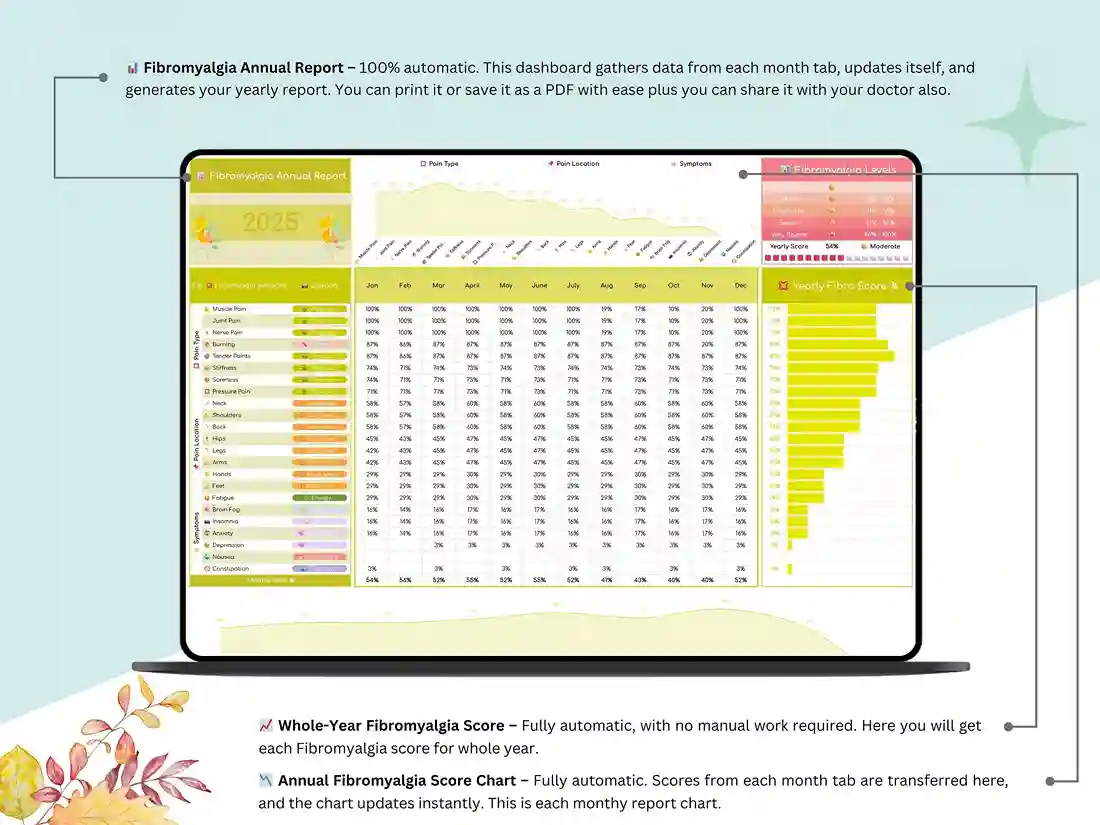
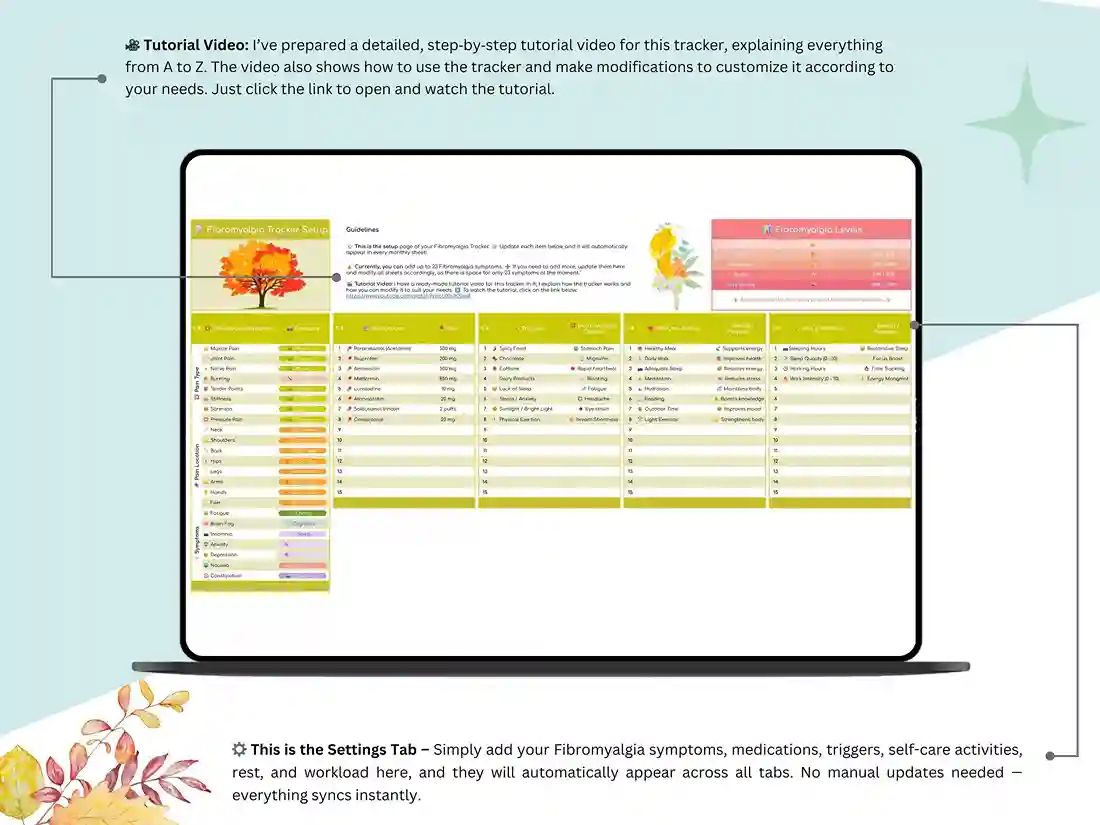
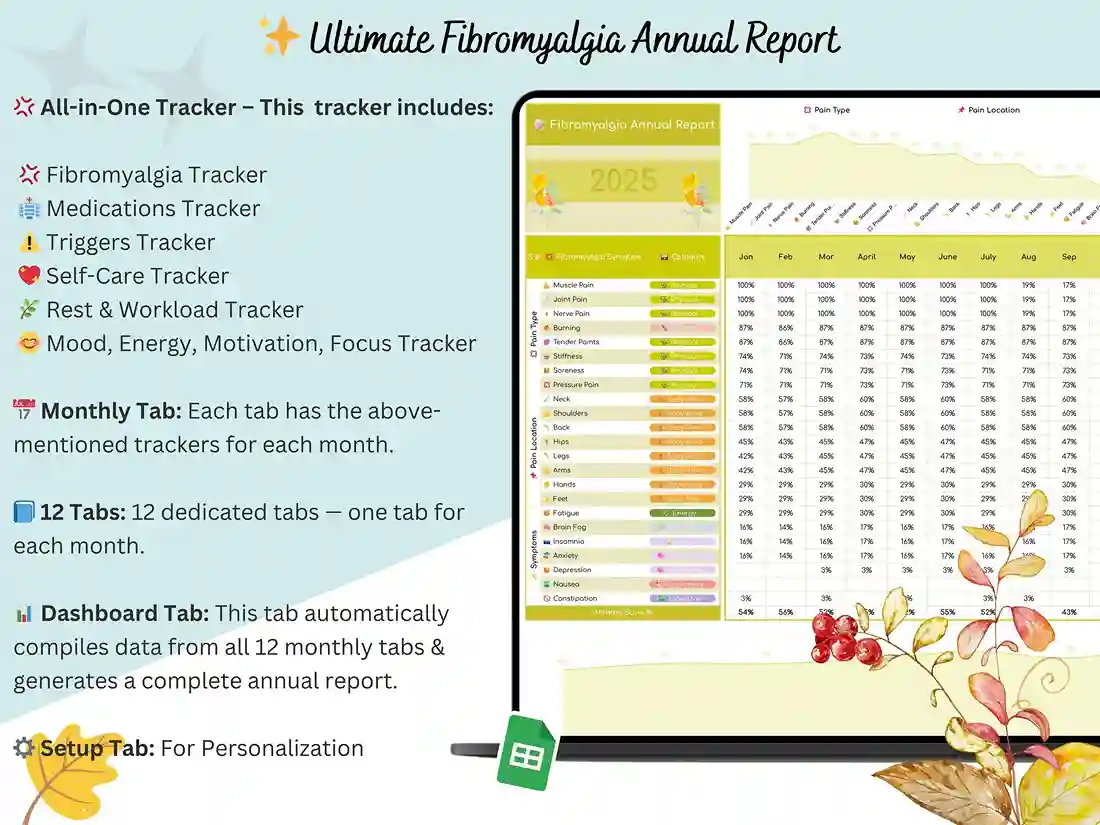
Everything eventually rolls up into the Annual Report tab, which turns twelve months of scattered daily entries into one visual chronic pain analytics dashboard — a genuinely readable summary instead of a spreadsheet full of numbers nobody wants to dig through. And because everyone’s fibromyalgia looks a little different, the Setup tab lets you customize your own pain types, symptom list, and categories so the whole thing actually fits your diagnosis instead of a generic template.
Who it’s for
This is built for anyone living with fibromyalgia, chronic pain, or overlapping chronic illness who wants something closer to a real spoonie planner than a productivity app that wasn’t made with their energy levels in mind. It’s also useful if you’re trying to connect the dots — figuring out whether your flares track back to bad sleep, a stressful week, or overdoing it physically. Caregivers use it too, as a single organized file for tracking a loved one’s symptoms instead of piecing things together from memory. And honestly, if you just want a chronic illness self care planner built around your own data instead of guesswork, this covers that too.
How it works
Download instantly after purchase, open the included PDF guide, and click through to your personal copy of the Google Sheet. From there you just start logging — the monthly and annual reports build themselves as you go. There’s also a short video walkthrough included, so getting set up takes a few minutes rather than an afternoon.
This tracker is meant to support the conversations you have with your healthcare provider, not replace them — it’s a self-monitoring tool, not medical advice. If you have questions before buying, or want a hand customizing it once it’s yours, just message us. Happy to help.
FAQ
Is this a Google Sheets file or an Excel file? Google Sheets, and it runs fine in any free Google account. It’s Excel-compatible too, if you’d rather keep it local.
Does it calculate my annual report automatically? Yes. Whatever you log in the monthly tabs feeds straight into the Annual Report tab — no formulas to manage yourself, it just builds as you go.
Can I customize which pain types and symptoms I track? Yes, that’s what the Setup tab is for. You can edit the pain type list, symptom categories, and labels so it actually matches your diagnosis instead of someone else’s.
Does this work for chronic illnesses besides fibromyalgia? It does. Because the categories are fully editable, it holds up well for general chronic pain and chronic illness tracking too, not just fibromyalgia specifically.
What if I get stuck setting it up? There’s a step-by-step video included, and you can always message us directly if you need a hand.
Reviews
There are no reviews yet.